


What is it about a Piet Oudolf garden that makes it look so natural, yet so beautifully designed? After visiting several of his gardens and experimenting in my own garden, I started collecting ideas for creating that same feeling at home. In this post, I’ll share what I’ve learned; from choosing plants and creating structure to using grasses and allowing plants to intermingle.
Originally published in August 2020 | Updated October 2026
What makes a Piet Oudolf garden different?
It isn’t really about having a “wild garden”. It is about creating a carefully designed planting that looks natural. A garden with an emphasis on perennials.
Years ago I visited the New York High line for the first time. This beautiful park on the westside of Manhattan, built on a historic, elevated rail line had been in the (dutch) garden magazines with a lot of attention to Piet Oudolf. Proud of “our” landscape designer, known for his use of plants in a natural garden. So I was curious. I loved the combinations of plants. It was January but attractive to see.
And that is one of the characteristics of an Oudolf garden, it is beautiful beyond the peek of summer.
Watch: A walk through the Vlinderhof in autumn
I recently visited the Vlinderhof in Vleuten in autumn and filmed a walk through this beautiful Piet Oudolf garden. Autumn is actually a wonderful time to see his approach: the seedheads, grasses and faded flowers become part of the composition.
Six principles of Oudolf planting
In “Planting” is described how a semi natural grassland appeals to us:
Intermingle
In a grassland, species intermingle. Instead of planting one type in a neat block, let different plants grow through and around each other. You are the guide, so if one species becomes too dominant, you may need to intervene. The idea is to create a planting where the plants feel connected rather than separated into individual groups.
Diversity
Diversity, the more you look, the more you see. Don’t feel limited if you like a lot of plants. Use different plants, forms, heights and textures so that there is always something new to discover. A diverse planting also changes throughout the seasons, giving you a different view every time you walk through the garden.
Complexity
You can use a lot of individual plants on a single square meter. By combining different species and allowing them to grow close together, you create a rich and complex planting. The plants interact with each other, creating layers of color, texture and movement rather than a collection of separate plants.
Change
A garden is never static. There is a constant shift in the distribution of plants as they grow, flower, set seed and return the following year. This seasonal change is part of the beauty of a naturalistic planting and means the garden can look different from one month to the next.
Coherence
Despite all the different plants, there should be an overall sense of unity. Repeating certain plants, colors, shapes or textures helps to connect the different parts of the planting. This is what keeps a garden with many different species from feeling chaotic.
Distinction
Some plants rise above the mass. They may be taller, have a distinctive shape, or simply catch your eye because of their color or structure. These plants act almost like punctuation marks in the planting, adding rhythm and giving your eye places to rest.
Think in Layers, the Matrix
We talked about intermingling and complexity, The basic idea is that a few dominant plants form a kind of underlying fabric or “matrix”, with other plants woven through it. Grasses are often part of that matrix.
The Royal Horticultural Society described it in Piet’s words at the opening of Wisley garden: “Piet explained that the matrix planting is formed of one or two key varieties that dominate, amongst a number of others that complement them. It looks very spontaneous but is actually quite controlled.”
Think of your planting as a woven fabric:
- Matrix: grasses and/or repeating plants
- Main characters: flowering perennials
- Accents: plants that rise above the planting
- Structure: plants and seedheads that keep the garden interesting beyond flowering season.



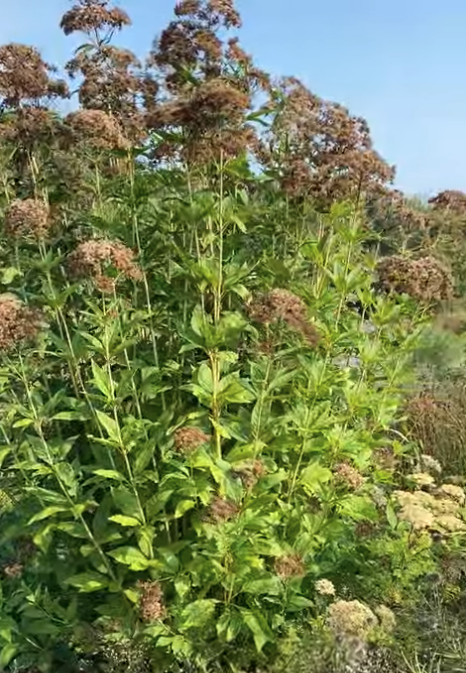
Beauty Beyond Summer
An Oudolf-inspired garden isn’t designed simply for maximum flowers in July. It is beautiful in all seasons.


Gardens by Piet Oudolf worth visiting
We have to take another step because we want to implement some of his ideas in our own garden. There are a lot of gardens you can visit (all over the world) on his site you can find them all, I will mention a few of the public gardens:
I’ve visited:
- USA, New York, https://www.thehighline.org/ as mentioned, here it started for me. The picture on top of this page is taken there. (a new article about the High Line here)
- USA, New York, Gardens of the Battery

- USA, Chicago, Lurie Garden
- Netherlands, Singer Museum Laren, Sculpture Garden
- Netherlands, Vlinderhof in Vleuten (part of Máxima Park)
Stil on my list:
- USA, Oudolf Garden Detroit
- UK, Pensthorpe, the Millennium Garden
- Germany, Weil am Rhein, Vitra Campus The Vitra Campus also features a design museum, shop, gallery, and café, offering something of interest for every area of interest covered by Woonlookbook.

Start planning your your garden inspired by Piet Oudolf
tips
This is not a description of a garden design but just some tips for a planting design. Piet Oudolf makes it easy for us. Accompanying the book ‘Planting: A New Perspective” a few of his designs are available to download. These documents give a rare insight in the designs of Piet Oudolf.
So if you visit one of the mentioned gardens try to link the plants to one of his designs. Note which plants appeal to you and try to built a scheme around those plants.
First think about the soil in your garden. Don’t use prairie plants if the earth is swampy. Make an inventory of the kind of light in a flowerbed and sketch your color scheme. If you are not sure, just try! If one of the species fails you can always try to replant them in a different place with more or less shadow and/or water.

tools
Keep this in mind, now write down (I don’t want to sound bossy, just inciting action)
- the plants you want to use for the spring garden
- the plants you want to use for the autumn/winter garden
- finish with the plants for summer.
Don’t forget
- grasses with their beautiful seed-heads,
- to use locally native plants,
- to differ in structure of the plants,
- allow self seeding,
- try to make a connection with the surroundings of your garden.
My favourite books and resources
I started with: Planting, a new perspective by Piet Oudolf and Noel Kingsbury. As they describe in the introduction, this is planting design for the twenty-first century, you learn about grouping and combining plants, how to intermingle, how the performance is of the plants in the long term “how perennial are perennials”, plant names, the metrics and you will be inspired by all photographs and planting plans.
Other inspiring books:
- Dreamplants for the natural garden, Piet Oudolf & Henk Gerritsen
- Planting the natural garden, Piet Oudolf & Henk Gerritsen
- Landscapes in Landscapes, Piet Oudolf
- The Oudolf Gardens at Durslade Farm, Rory Dusoir
Video: I liked especially this one.
Bonus Tips
Start Small, you don’t need a complete garden makeover
You don’t have to redesign your entire garden. Start with one border and ask yourself:
- What is the soil like?
- How much sun does it get?
- Which plants do I already love?
- What will look good after flowering?
- Where could I introduce grasses?
- Which plants could intermingle rather than stand alone?
- What will this border look like in autumn and winter?

Shop
This blog may contain affiliate links, which means I receive a small commission if you make a purchase using these links.


