


Interior design has been my hobby since I was a child. I bought my first interior design magazine when I was 15, and my first design chair when I was 16. To pay for it, I worked six weeks during the holidays in a hospital kitchen.
At the time, I never thought of turning my passion into a profession. Perhaps things were simply different in the seventies.
In the past decade my love for interiors returned in a new way. When the children left home, I wanted to transform our house into a calm, balanced place to come back to. I started making interior design mood boards and slowly redecorated the rooms.
Friends and family became curious about the process. Because I had collected so many magazines and Pinterest images over the years, I could easily help them create their own mood boards.
In this blog, How to Make an Interior Design Mood Board, I share the simple steps I use myself. I hope my tips will help you create a home that feels exactly the way you want it to feel.
This blog was first published in June 2022 and updated in 2026.
What is an interior design mood board?
An interior design mood board is a way to explore your ideas and create a cohesive picture of how you want your interior to look and feel.
There are different ways to approach a mood board. You can start with a more abstract direction — focusing on the atmosphere or feeling you want to achieve. Or you can make it more concrete by adding your favorite furniture, textiles, colors, and materials.
Personally, I often use the second approach. For family and friends it can be difficult to imagine how a room will look when they only see an abstract mood board.
That is why I usually work with product photos, floor samples, textures, and sometimes wallpaper samples. Combined with a simple floor plan, the mood board already sets the tone for a new interior design.
- An interior design mood board helps you see the balance between colors, materials, furniture, and textures before you start decorating.
- It is a simple but powerful step that helps you create a home that feels harmonious and thoughtfully designed.
Which tools can you use to make an interior design mood board?
Of course, you can use digital tools. I often start there myself by collecting inspiration online before creating a physical board. For example, when I worked on ideas for Stichting Vaarkracht, I first gathered images on a Pinterest board.
Another option is to use a mood board template in PowerPoint, Keynote or Canva. On Creative Market you can find many ready-made templates that help you arrange images, colors, and materials in a clear layout. (This is an example of a template.)
Personally, I still prefer working with a physical mood board. I usually use a foam board of about 50 × 70 cm (B2 size). Depending on the atmosphere I want to create, I choose a white, grey, or black background.
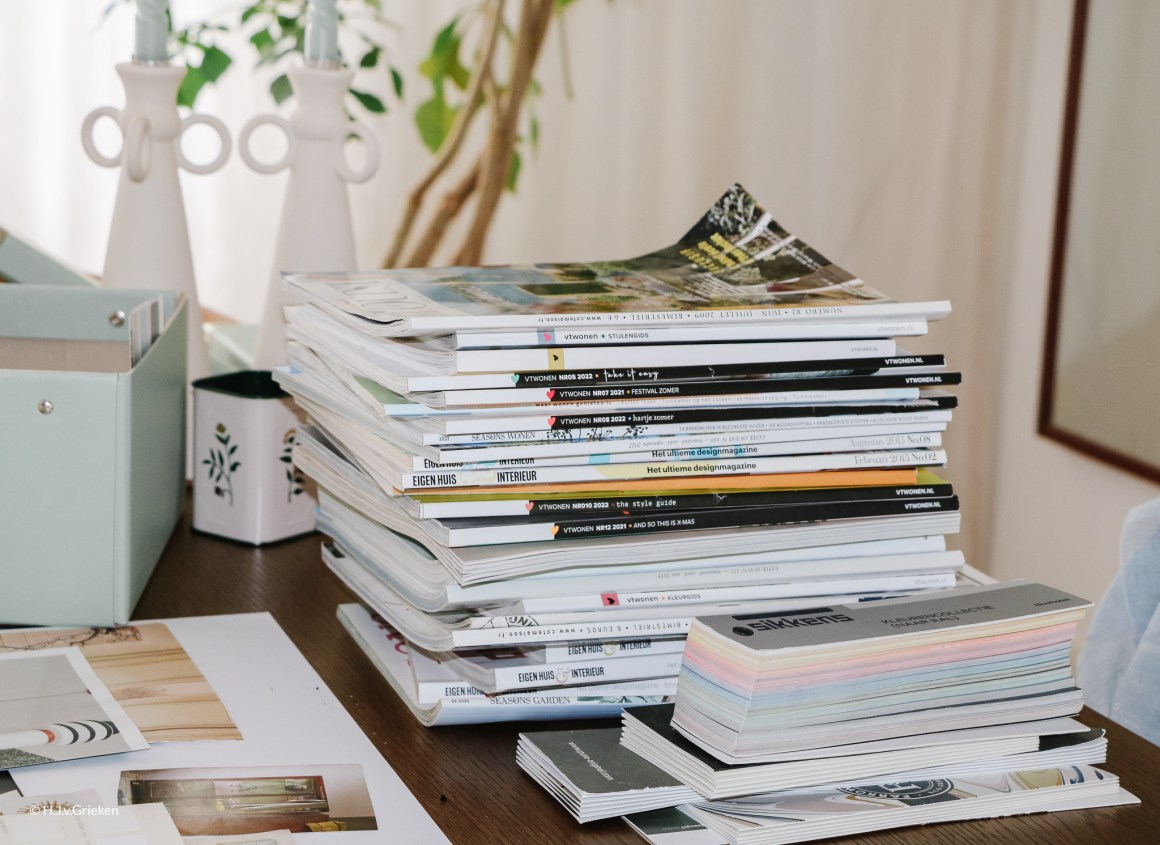
What I love about a physical board is the depth it creates. By adding real materials — fabric samples, wallpaper pieces, textures, and printed images — the mood board becomes much more tangible. You can really see and feel how the elements work together.
How to create an Interior Design Mood board
First, determine your starting point. Ask yourself: what feeling do I want when I enter the room? Try to describe the atmosphere in a few words. Calm, warm, elegant, natural; these kinds of keywords help guide the whole design. More about keywords here (with free download).
Once you have that direction, start collecting images and materials. This is the moment when the mood board really begins to take shape.
A few things I usually add to a mood board:
- photos from interior design magazines
- printed images from the internet or Pinterest
- samples of wooden floors or other materials
- wallpaper or textile samples
- a small color palette
- decoration or lighting ideas
If you plan to keep certain furniture, take photos of the current pieces and include them on your mood board. That way you immediately see how the new ideas will work with what you already have.
Floors are very decisive for the overall look of a room, so I always try to include a sample or photo of the flooring material. And don’t forget to add a clear color scheme — it ties everything together beautifully.
An example
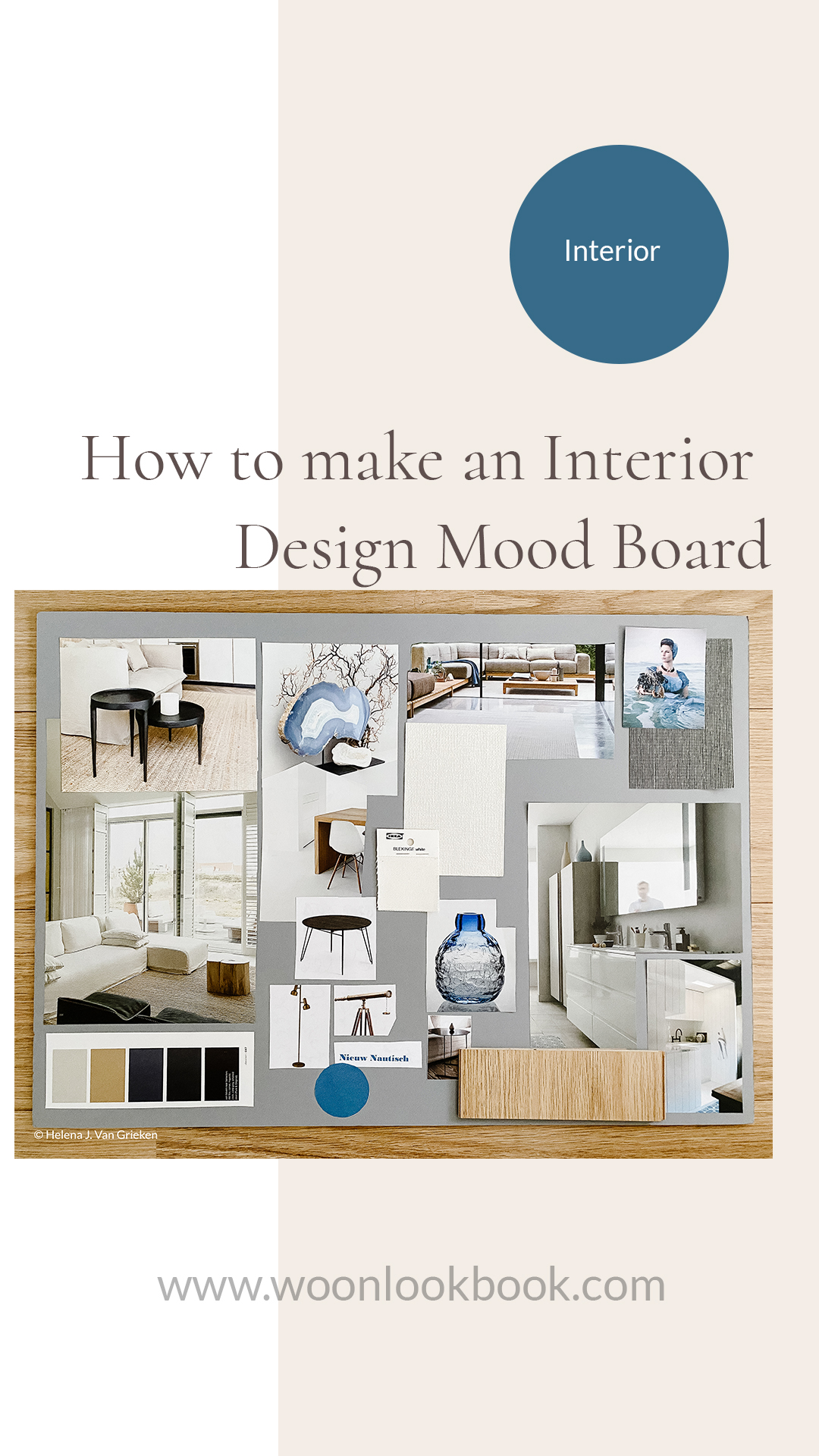
When I created a mood board for Stichting Vaarkracht, the starting points were quite specific. The interior needed clean lines and a calm atmosphere. It is a “water house”, so the design should feel connected to water, but without the obvious Ibiza beach style.
Comfort was important, yet the space also needed a table suitable for small business events.
From there, the search began: images from interior magazines, wooden floor samples, wallpaper and textiles, printed pictures from the internet, a color palette, and small decoration ideas. Slowly the board filled up, and the atmosphere of the space became visible.
At a certain moment you will notice that the board starts to “click”. The colors feel right together, the textures support each other, and the room you imagined slowly appears in front of you.
This is the result of my search

What Do You Need to Make a Physical Mood Board?
- foam board, I prefer 50 × 70 cm (B2 size)
- scissors and pins or glue
- Samples (fabric, wallpaper, floor)
- photos (from magazines or printed)
- printer
- color swatches
Mood board inspiration for every style
Different Interior Styles
Every interior starts with a feeling. And that feeling can be translated into many different styles. In the gallery below you will see several examples of interior design mood boards — each with its own atmosphere, colors, and materials.
Some boards are calm and minimal, others feel warm and layered. Notice how textures, furniture shapes, and color palettes create a completely different mood each time.
If one of these styles catches your eye, you can explore the full mood board and explanation on the next pages.


For example:
- Industrial – a mix of raw materials, dark tones, metal, and wood.
- Modern Vintage – contemporary pieces combined with characterful vintage elements.
- Brooklyn Relax – a warm urban style with soft colors and comfortable textures.
- Beach House / Coastal – light colors, natural materials, and a relaxed seaside atmosphere.
- Classic Contemporary – timeless elegance with balanced proportions and refined details.
- Contemporary Holiday Home – a fresh, modern interior with a relaxed vacation feeling.
Take a moment to scroll through the gallery and see which mood board speaks to you. Often one style will immediately feel right — and that can be the perfect starting point for your own interior mood board.
Bonus Tips
- Book tip: Nordic Moods by Danish interior designer Katrine Martensen-Larsen. If you love Scandinavian interiors, this book offers beautiful inspiration and is a wonderful starting point for creating a mood board in a Nordic style.
- Collect first, arrange later. Don’t start pasting pictures and samples onto your board until you have gathered all your materials. When everything is in front of you, it is much easier to create a balanced composition.
- Photograph heavy materials.If you want to hang your mood board on the wall of the room you are redesigning, take photos of heavy materials instead of attaching them to the board. Otherwise, the board may simply come down.
- Moving to a new home?Create one overall mood board with the most important materials and colors for the house. Then make smaller mood boards for each individual room.
- Still wondering if it’s worth the effort? Here’s why you should make a mood board today.
Do you have questions about making a mood board, please let us know in the comments.
Summary (or tl;dr) : Creating a mood board is the first step in designing a space you love. Start by gathering inspiration from magazines, Pinterest, or your surroundings. Choose a color palette, textures, and styles that reflect your personal taste. Use online tools like Canva or go analog with scissors and glue. Your mood board should capture the feeling and look you want for your space; think of it as your interior design compass
Enjoy making your mood board.

shop the post

This blog may contain affiliate links, which means I receive a small commission if you make a purchase using this link.


4 comments
>